

GAVIN JOHN محمد جبريل
SEP 27
Excerpts:
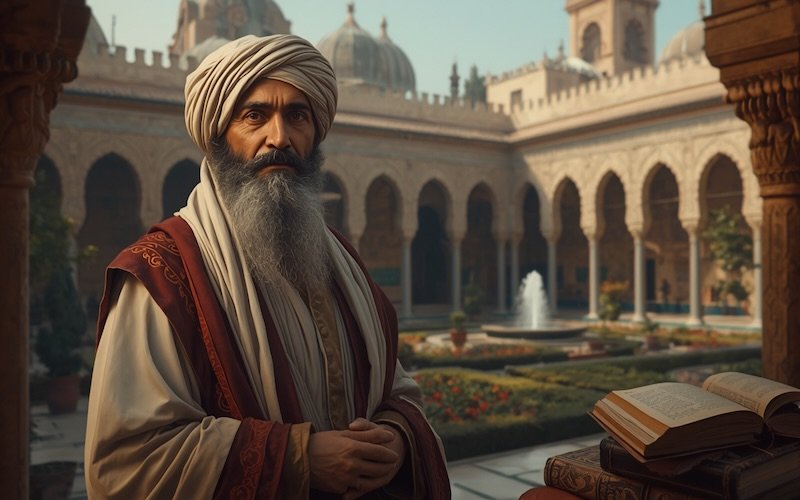
Abu Al Walid Muhammad ibn Rushd, better known in the West as Averroes, certainly embodies the synthesis of the Islamic tradition and philosophical contemplation.
He was born in Cordoba in 1126. He arrived at a time when the Islamic world was deeply entrenched within the intellectual inheritance of Greece. He became a great commentator on the work of Aristotle, while also an Islamic judge, physician and jurist.
Personally, I find his life and work fascinating. He made great contributions to the philosophical tradition which we have all inherited. However, in my own humble opinion, he misunderstood the very purpose of philosophy.
Ibn Rushd, seemed to be so enamoured by Aristotle, that he attempted to re-interpret the Islamic tradition to fall into line with philosophy.
This is where the controversy that surrounds him was born.
Nonetheless, he is a thinker who is very much worth studying. We can learn from his work and also his mistakes…
…Ibn Rushd’s Legacy
In 1195 AD, Ibn Rushd was subjected to a period of exile and disgrace. He had works banned, and fell from political favour. Shortly before his death he returned to Cordoba.
However, his legacy was only beginning. European thinkers would engage with his thought and his works would be taught throughout the West’s universities. He was known as an expert on Aristotle.
This is interesting. A Muslim from Cordoba helped us, in Europe, rediscover Aristotle.
He showed us that a Muslim can engage with our philosophical inheritance. However, engagement does not need to be surrender.
We do not need to choose between Europe and Islam.
Europe has been moving toward Islam for centuries. Through our thought and the fall of Christianity.
We cannot look backwards and romanticise a Christian revival. This ship has sailed.